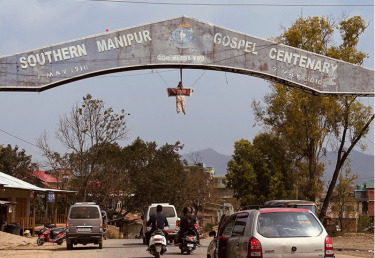
Tribal Christian leaders in north-eastern state of Manipur have appealed to President Droupadi Murmu to take urgent steps to restore peace and support rehabilitation efforts following prolonged sectarian violence.
President Murmu, the first Indian head of state from a tribal background, visited Manipur on 11-12 December. During her visit, she met state officials, community leaders and representatives from both the Hindu-majority Meitei community and minority tribal groups, most of whom are Christians.
Addressing a civic programme in the state capital, Imphal, on 11 December, Murmu acknowledged the suffering caused by the conflict. She said she was aware of “the pain that the people of Manipur have been going through” since violence erupted in May 2023.
The programme took place under heavy security, as some Meitei organisations called for a shutdown during the visit, accusing state and federal authorities of failing to adequately address the needs of displaced people.
Manipur was placed under federal rule on 13 February after the resignation of Chief Minister N. Biren Singh, who faced accusations of failing to contain the violence between Meitei and tribal communities. The unrest began after tribal Christians protested a move to grant special legal status to the Meitei community, which is economically and politically influential.
Since then, more than 260 people have been killed, hundreds of homes, shops and places of worship have been destroyed, and over 60,000 people, largely tribal Christians, have been displaced.
Murmu said the federal government remained “fully committed to strengthening harmony, ensuring security and supporting Manipur” as it works towards stability. She assured residents that addressing their concerns was a top priority and pledged that development efforts would reach all parts of the state.
Her visit followed an appeal from the Kuki-Zo Council, a representative body of Indigenous communities, which called for her intervention to help resolve the humanitarian crisis and restore lasting peace. In a statement issued on 10 December, the council said the visit offered hope to those still living with the effects of the conflict.
The group also urged the President to visit tribal-majority areas and meet victims directly, noting her own understanding of tribal identity and struggles. It expressed hope that her presence would draw attention to long-standing concerns over displacement, insecurity and targeted violence.
At the same time, six Meitei community organisations appealed to Murmu to initiate dialogue between Meitei and Kuki-Zo leaders to promote reconciliation and communal harmony.
Church leaders welcomed the President’s visit as a constructive step. One leader, speaking anonymously, said her presence could help move the peace process forward after witnessing the suffering of the people first-hand. Another Church leader described the visit as a positive sign for communities still facing hardship more than a year after the violence began.
Adapted from UCA News.