A hillside near Dangesi village gave way on the morning of Friday, 30 October, while a family slept in their house nearby. The debris buried the home, killing Achyuta Pradhan, 30, his wife Anisha, 25, and their nine-month-old son. Firefighters and a state disaster rescue team saved two others, Sumitra Pradhan, 60, and Dutta Pradhan, 35.
The landslide, in the hills of Odisha’s Kandhamal district, came two days after Cyclone Arnab slammed into India’s eastern coast. It took the storm’s death toll to at least 10, with seven killed in Andhra Pradesh, the state immediately to the south. Villagers fear more people are missing, though the government had not confirmed this by Friday evening.
“The debris from the hill buried their house, leading to the death of the three members of a family. Such an unfortunate incident has happened despite the state government taking all measures,” said Rabi Narayan Naik, the Odisha minister in charge of relief in the district. About 450 people from the area now shelter in a relief camp, and Chief Minister Mohan Charan Majhi has promised Rs 4 lakh (400,000 rupees) for each of the dead, to be paid to their next of kin.
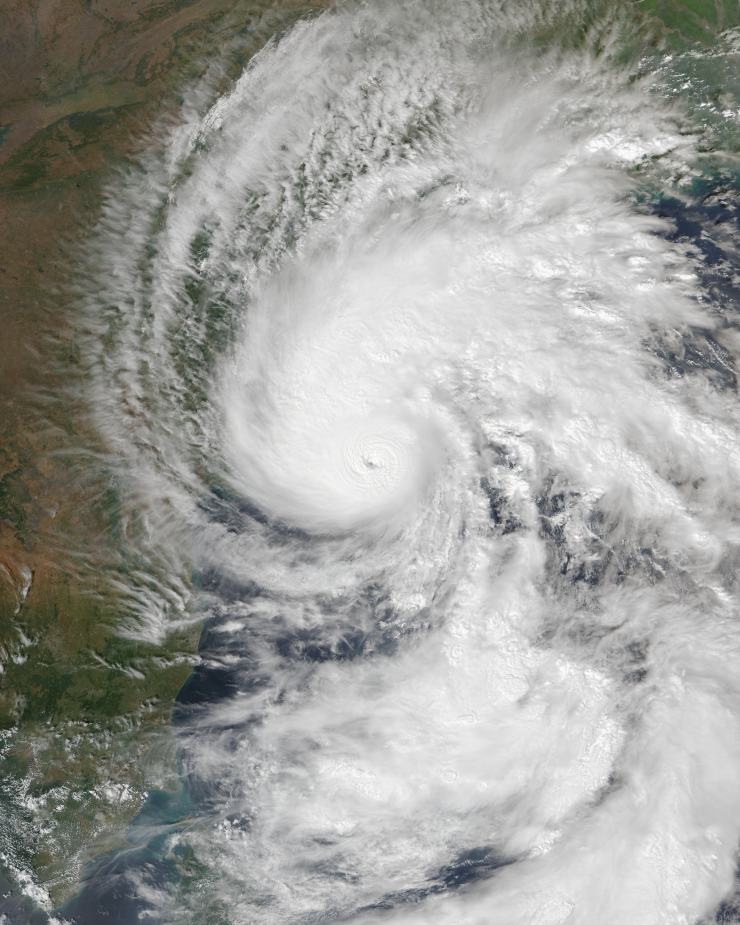
Arnab took shape over the Bay of Bengal on 26 October, the first cyclonic storm of the year in the North Indian Ocean. Its name, contributed by Bangladesh, is the Bengali word for “ocean” and is pronounced “Ornab”. Over sea water close to 30°C it grew fast, its winds jumping by 74 km/h in a single day. The India Meteorological Department (IMD), the national weather agency, put its peak sustained winds at 150 to 160 km/h; the US Joint Typhoon Warning Center estimated up to 213 km/h.
The storm crossed the coast between 2 am and 8 am on Wednesday, 28 October, southwest of Yanam, a tiny enclave of the Union Territory of Puducherry tucked inside Andhra Pradesh, and about 60 km from the port city of Kakinada. It arrived as a “very severe cyclonic storm”, the third-highest category on India’s scale, with winds of 125 to 135 km/h and gusts of 150 km/h. Arnab crawled along the shoreline, at one point barely moving, and its slow passage meant hours of punishing wind and rain. Visakhapatnam was drenched with 315 mm of rain by Wednesday morning, and Vizianagaram, Anakapalli and Srikakulam each took more than 250 mm.
Andhra Pradesh and Odisha had moved at least 180,000 people to safety and opened nearly 4,000 cyclone shelters before the storm arrived. Airports at Visakhapatnam, Vijayawada and Rajahmundry suspended flights from 27 October, dozens of trains were cancelled and schools closed.
Arnab left Andhra Pradesh with trees lying across highways, electricity supply disrupted and farmland under water. More than 15,000 power poles toppled, and in West Godavari district alone around 12,500 trees came down. Some 345,000 farmers in 14 districts lost crops, with about 224,000 hectares of fields and plantations damaged. Chief Minister N Chandrababu Naidu puts the state’s preliminary loss at Rs 4,600 crore (46 billion rupees; a crore is 10 million) and says it could rise. His energy minister, Gottipati Ravi Kumar, estimates damage to the power network at about Rs 500 crore, and the state has asked Telangana for 1,000 electricity workers to restore supply. Families of the dead will receive Rs 5 lakh each, and federal teams were scheduled to visit the state on Friday to assess the damage.
Odisha first appeared to have escaped lightly, with no deaths on the day of landfall. Then the rain kept falling. The Rushikulya, Vamsadhara and other rivers swelled across the state’s south, and Ganjam district now bears the worst of it. More than 1,000 villages in Ganjam and Gajapati are affected, home to about 62,500 people, and around 300 villages in Ganjam remain marooned.
Floodwater washed away a stretch of National Highway 326 in Gajapati, and a bridge collapsed in Mohana block. Landslides disrupted the roads linking Berhampur, Mohana and Rayagada, and trains were cancelled or diverted. By Friday, rescue teams had moved more than 59,000 people out of harm’s way in three days, and the state had sent more than 30 senior officials to Ganjam.
Majhi flew over the two flooded districts on Friday. “The entire administration is working round-the-clock to ensure that food, drinking water, and emergency healthcare reach those affected without any hindrance,” he posted on X. President Droupadi Murmu telephoned him the same day and, according to his office, “expressed her deep concern over the cyclone and flood situation in Odisha and assured comprehensive support”. Federal Home Minister Amit Shah had called on Thursday.
Arnab itself has faded, weakening by Thursday into a depression, a far gentler low-pressure system, over southern Chhattisgarh. Its moisture has not. The remnants drifted north, and Sitamarhi and Madhubani districts in Bihar were placed under a red alert, the highest level of weather warning, for extremely heavy rain on Friday.
In Uttar Pradesh, India’s most populous state, the rain has already damaged crops and homes. On Friday, Chief Minister Yogi Adityanath ordered prompt compensation for lost harvests, dead livestock and collapsed houses, and relief camps for those left without shelter. “The government stands firmly with farmers in every adverse situation,” he said, warning officials that negligence would not be tolerated. He urged families to keep children indoors and to keep away from dilapidated buildings, trees, tin sheds and electricity poles.
Across the border, Nepal has declared a high alert until Saturday and halted trekking in its high Himalaya, where the storm’s moisture threatens heavy snow, snowstorms and avalanches.