A circular issued by the Chhattisgarh School Education Department making the recitation of Hindu mantras and prayers compulsory in government schools has triggered protests from tribal organisations, Christian bodies and the Opposition Congress, and drawn a legal challenge in the Chhattisgarh High Court, within weeks of its release.
The circular, numbered GENCOR-35010/1981/2026 and dated June 12, was sent to all District Education Officers in the state. It directs schools to follow a fixed daily routine of religious recitations from the 2026-27 academic session, which began on June 16.
Under the order, the morning assembly must include the national anthem, the national song, the Deep Mantra, Saraswati Vandana, Guru Mantra, and excerpts from the biographies of notable personalities. Students are required to recite a Bhojan Mantra before the mid-day meal. The closing session at the end of the school day includes the state song, the Gayatri Mantra and the Shanti Mantra.
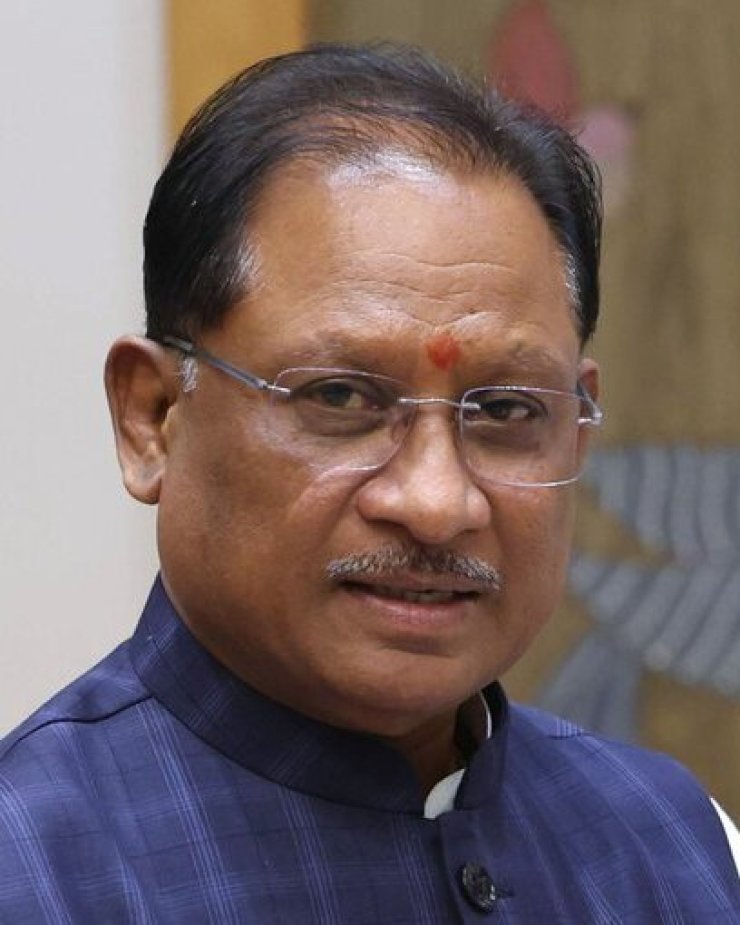
Chief Minister Vishnu Deo Sai said on June 16 that his government was committed to “integrating Indian culture, traditions and spiritual values with modern education.” The state has asked District Education Officers to ensure strict compliance, with officials saying inspections will be carried out and that administrative action may follow against school managements or principals found in violation.
The Association for the Protection of Civil Rights (APCR) was among the first to respond, issuing a statement on June 14 calling the circular “patently unconstitutional” and saying it “blurs the important line between cultural activities and religious observance in state-run schools.” The organisation said making prayers from any one religion compulsory amounted to the state endorsing that faith over others, and asked the government to withdraw or revise the order.
The Congress, the principal Opposition party in the state, raised the matter on June 16. Party spokesperson Sushil Anand Shukla said the recitation of the national anthem, national song and state song was appropriate, but questioned the inclusion of the Gayatri Mantra, Deep Mantra, Saraswati Mantra and Bhojan Mantra. “The government appears determined to turn schools into Saraswati Shishu Mandirs. Imposing the RSS agenda in government schools is wrong,” he said, warning that the move could prompt demands from other communities for the inclusion of verses from the Quran, Gurbani or the Bible.
Tribal leaders also opposed the directive. Manish Kunjam, a former MLA and a senior figure in the Sarva Adivasi Samaj, told journalists that “Adivasis are not Hindus, and they cannot be forced into Hindu religious traditions through schools.” He described the circular as an attempt by the Rashtriya Swayamsevak Sangh to impose Hindu practices on tribal children and demanded its immediate withdrawal, arguing that the structured chanting sessions cut into time meant for academic study. On June 19, the tribal students’ body Adivasi Yuva Chatra Sangathan submitted a letter to the governor seeking that the circular be scrapped.
A writ petition challenging the order was also filed before the Chhattisgarh High Court at Bilaspur on June 23. The petition was moved by Dr. Aamir Khan, an advocate and State Vice President of the Tahaffuz-e-Namoos-e-Risalat Action Trust (TNRAT) Legal Cell. It contends that introducing activities associated with a particular religious tradition in state-run schools raises concerns relating to the secular character of the Constitution, the principle of equality, and citizens’ fundamental rights, citing Articles 14, 21, 25 and 28, and seeks judicial review of the order along with interim relief. Khan said India was a democratic, pluralistic and secular nation where equal treatment of all students in government schools was a constitutional obligation, and that no student should be compelled to take part in any religious activity against his or her personal faith or wishes. TNRAT said it was not opposed to any religion or religious tradition, but was pursuing legal remedies to protect students’ fundamental and constitutional rights, religious freedom, and equal opportunity.
Christian organisations in the state wrote separately to Governor Ramen Deka seeking revocation of the order. Christopher Paul, president of the Christian Welfare Society, told media that if the government would not withdraw the directive, it should at least exempt Christian students and teachers from taking part. “It is an open violation of the rights of minorities who are free to practice their religion,” he said, adding that a letter seeking exemption sent to the education department had gone unanswered. The Progressive Christian Alliance, a Christian human rights body in Chhattisgarh, indicated that the organisation was consulting legal experts and preparing to challenge the order in the High Court should it be enforced on Christian institutions.
On June 24, the All India Lawyers Association for Justice (AILAJ) issued a statement describing the circular as a violation of Article 28(1) of the Constitution, which bars religious instruction in institutions wholly funded by the state. The association cited several Supreme Court judgments, including D.A.V. College v. State of Punjab (1971) and Bijoe Emmanuel v. State of Kerala (1986), and said it had no objection to the national anthem or national song being sung in schools but objected specifically to the compulsory recitation of devotional prayers.
Tribal organisations have sent a memorandum to the governor, the chief minister and the school education minister, stating that protests will be organised across the Bastar region if the mandatory recitations are not withdrawn.