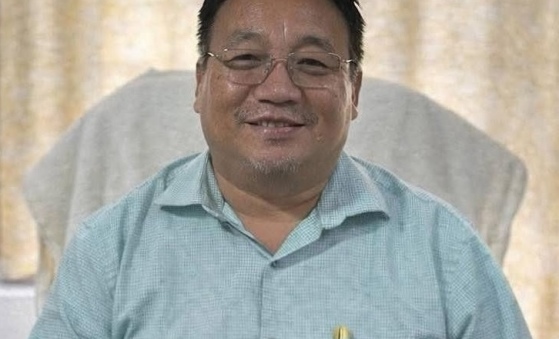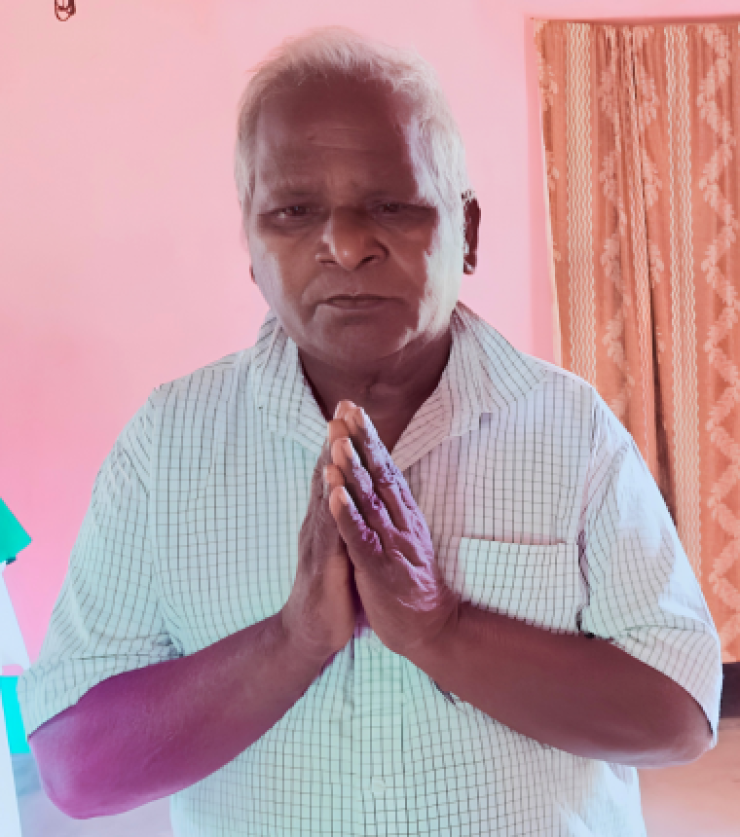
Christodas Behera, a Catholic catechist in eastern India, has marked 43 years of lay ministry that carried him through an anti-Christian pogrom. A mob attacked him in 2008, and he and his wife ended up in a government relief camp.
A catechist is a lay church worker, not an ordained priest, who prepares believers for the sacraments and guides their spiritual life.
Behera was born in 1959 in Sandakupa village. He works for the Miraculous Medal Parish in Mondasoro, in Kandhamal district of Odisha state, some 300 kilometres (185 miles) southwest of the state capital, Bhubaneswar. Fr. Manuel Richard, then parish priest at Our Lady of Charity Parish in Raikia, in the Archdiocese of Cuttack-Bhubaneswar, married him to Philomina in 1983. The couple later settled in nearby Pirigada village to continue lay pastoral care.
Kandhamal is a rural district where tribal Christians, who belong to India’s indigenous peoples, and Dalit Christians, from the bottom of its caste hierarchy, form a religious minority.
The district became the centre of what many regard as the worst anti-Christian violence in India’s history. It followed the killing of Swami Laxmanananda Saraswati, a hardline Hindu religious leader who had worked there for about 40 years. He worked with the Vishva Hindu Parishad (VHP), a Hindu nationalist organisation, which had sent him to counter Christian missionaries and bring tribal converts into the Hindu fold. Church groups say his followers helped drive attacks on Christians at Christmas 2007. AsiaNews, citing witnesses, reported that mobs destroyed 53 churches and 67 hostels in three days while police stood by, and that five people died and 400 homes burned in one parish.
Gunmen shot Saraswati dead on August 23, 2008. The state administration blamed the Maoists who also claimed responsibility for the attack on the Swami and his Ashram, but Hindu nationalist groups blamed Christians and proceeded to attack the community. Over the next few months, armed mobs demolished Christian homes, churches and institutions and drove thousands into the surrounding dense forests. Church and rights groups count about 100 dead and 56,000 displaced, while official tallies are lower.
A citizens’ tribunal headed by former Delhi High Court Chief Justice A.P. Shah found in 2010 that the RSS volunteer body, the VHP and the Bajrang Dal youth group fed a deliberate strategy against Christians. Odisha’s then chief minister told the assembly that police had arrested hundreds of members of the three groups.
In Pirigada, mobs tried to force Behera and fellow Christians back into Hinduism. Extremists shaved his head by force, made the Christians bow to Hindu deities and forced them to drink water mixed with cow dung. Many Hindus revere the cow, and the ritual was supposedly meant to purify the Christians and convert them to the Hindu fold. Security forces escorted the couple to a relief camp, which Behera credits to divine providence.
Justice has been scarce. By 2014, the Evangelical Fellowship of India, the national alliance of evangelical churches, counted 827 registered cases, with convictions in 75 and only nine for killings.
Behera and Philomina remain committed to their ministry in Pirigada, a Holy Family mission substation of Our Lady of Charity Parish. They serve 14 Catholic families who live among a Hindu majority.
“It is God’s abundant grace and power that has kept us alive and active,” Philomina said of their ordeal.
“I find joy in enduring pain, agony, and persecution for the Lord,” Behera said. “They can target our bodies, but not our souls. Nobody can shake our faith in Christ.”
Local elders spoke of religious freedom amid pressure on minorities from religious nationalism. Abraham Nayak, the community’s oldest resident, drew on both scripture and civil rights. “If God is with us, who can be against us?” he said, adding that no citizen of a democratic republic should be forced to change faith. Article 25 of India’s Constitution guarantees freedom of conscience and the right to profess, practise and propagate religion.
Lay leaders and clergy across South Asia say rural minority congregations often rely on the quiet resilience of catechists like Behera.
Fr. Richard’s early blessing on the couple continues to bear fruit in Odisha’s interior. For parishioners, Behera’s 43 years show dignity, endurance and quiet devotion to pastoral care.
This report is based on the account by Purushottam Nayak for Radio Veritas Asia