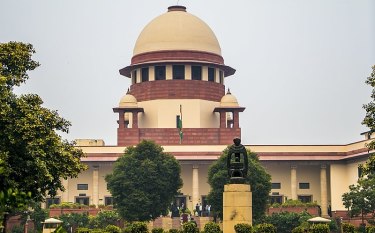
The Supreme Court has instructed all state governments to properly enforce a law requiring private schools to reserve 25 per cent of entry-level places for children from economically and socially disadvantaged backgrounds.
In an order issued on 13 January, the court said the rule must be applied “without exception”, stressing that at least a quarter of seats in entry-level classes must be set aside for children from weaker sections, as required under the Right to Education (RTE) Act.
The judges said state authorities have a constitutional duty to protect children’s right to education and to regulate private schools to ensure those rights are not denied, even when education is provided outside the government system.
The ruling followed a case brought by Diniesh Biwaji Ashtikar, who said a private school in his area refused to admit his children in 2016 despite having seats available under the RTE quota. His earlier appeal had been rejected by the Bombay High Court on procedural grounds.
The RTE Act, passed in 2009, made free and compulsory education a fundamental right for children aged six to fourteen. It requires private schools to reserve 25 per cent of entry-level places for disadvantaged students, with governments reimbursing schools for the fees.
However, media reports and school representatives say the law has been poorly implemented, with many private schools resisting admissions due to delays and shortfalls in government reimbursements.
Father Thankachan Jose, former national president of the All-India Association of Catholic Schools, welcomed the ruling, saying it promotes equality and inclusion in education.
He noted that Catholic schools, which are recognised as minority institutions, are exempt from the RTE requirements following a Supreme Court decision in 2014. Even so, he said Catholic schools have long served children from poor, Dalit and tribal communities.
Sunny Varghese, a Catholic school principal in Gujarat state, also praised the decision, saying it could lead to meaningful social change if enforced properly. He added that although his school is not legally bound by the law, it already admits around 25 per cent of students from disadvantaged backgrounds.
Some private school administrators, speaking anonymously, said financial concerns remain a major obstacle. They said reimbursements from state governments are often delayed and usually fall short of actual education costs.
The Supreme Court also directed states to ensure that children are not denied admission because of technical or procedural issues. It asked the National Commission for Protection of Child Rights to gather information on how states are implementing the law and submit a report by 31 March.
Adapted from UCA News.