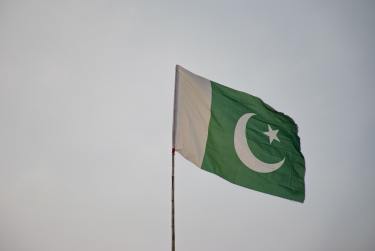
Human rights advocates are calling on the European Union to launch a thorough investigation into Pakistan’s continued violations of religious freedom and other fundamental rights, as an EU monitoring mission begins a major review of the country’s trade privileges.
From Monday (24 November), the EU delegation will assess Pakistan’s progress on implementing 27 international conventions linked to the GSP+ scheme, a programme that grants reduced or zero tariffs on exports to Europe in return for commitments to human rights, labour protections, good governance, and environmental standards. Pakistan has benefitted from this status since 2014, a period in which its textile exports to Europe have more than doubled.
During the review, the mission is expected to meet government officials, civil society groups, labour representatives, and rights organisations. The visit had originally been scheduled for June but was delayed because of the Iran-Israel conflict.
Akmal Bhatti, chairman of Minorities Alliance Pakistan (MAP), said the government has “completely failed” to uphold basic rights guaranteed under both national law and international agreements. He warned that Christians and other minority communities continue to face discrimination, hostility, and the persistent misuse of Pakistan’s blasphemy laws.
Bhatti pointed to recent court proceedings that exposed alleged cooperation between false accusers and state institutions, noting that a judicial inquiry ordered by the Islamabad High Court was later halted by an appellate bench. “The federal government must investigate these cases, and the international community must monitor its progress,” he told Christian Daily International.
He also criticised the lack of accountability for the August 2023 attacks in Jaranwala, where churches and Christian homes were targeted. Although authorities have since banned the extremist Tehreek-e-Labbaik Pakistan (TLP), Bhatti noted that senior figures associated with the violence have not been arrested.
Bhatti further highlighted delays in Punjab province’s stalled legislation to outlaw child marriage and to prevent forced religious conversions, issues long raised by minority groups. He urged the EU mission to challenge officials on the status of these proposals. Minority leaders are also renewing calls for non-Muslims to be allowed to elect their own representatives and to remove constitutional barriers preventing them from serving as president or prime minister.
Similar concerns were voiced by Aslam Pervaiz Sahotra, chairman of the Pakistan Masiha Millat Party, who said the overall human rights situation “has only worsened over the years”. He criticised the government for claiming improvements that minorities “cannot see reflected in their daily lives”.
“Continuing trade benefits despite ongoing violations sends a dangerous message that economic priorities outweigh human rights,” Sahotra warned. He urged the EU to ensure its trade policy upholds principles of justice and accountability.
Speaking to Dawn News, EU Ambassador to Pakistan Raimundas Karoblis said Pakistan must demonstrate stronger compliance with its international commitments to retain GSP+ privileges. The current review will examine issues ranging from minority protections and blasphemy legislation to enforced disappearances, child labour, women’s rights, and the use of the death penalty.
The EU has extended Pakistan’s GSP+ status until 2027, though the findings of this monitoring cycle will be crucial for any future application under the updated scheme. Pakistan’s commerce ministry reports that the country has enjoyed duty-free or low-duty access for products including textiles, surgical instruments, and home goods, with exports to the EU rising to $3.17 billion from July to October, up from $3 billion during the same period last year.
Pakistan has formally ratified all 27 conventions required under GSP+, while the EU’s current monitoring framework highlights 13 priority areas, including freedom of belief, labour rights, transparency, environmental protection, and the prevention of torture.
Adapted from CDI.