A Christian family in Pakistan faced distress and humiliation when police officers and unidentified men allegedly tried to stop the burial of a woman at a Christian cemetery near Islamabad. The incident has renewed concerns over disputes involving land reserved for Christian burials and the protection of religious minority rights.
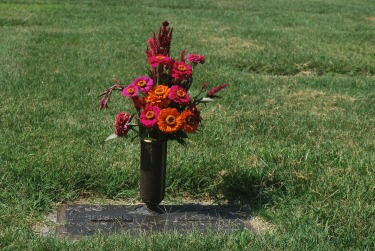
The incident occurred on 28 September at the cemetery of the Roman Catholic Christian Cooperative Housing Society in Humak, Islamabad, as relatives gathered to bury Fazilat Bibi, who had died the previous night.
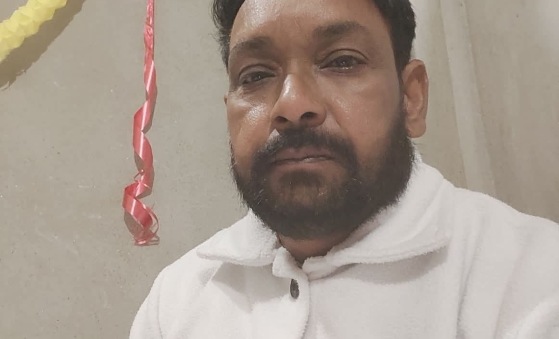
Her daughter, Nusrat Iftikhar, said the family was already grieving the loss of their mother, following the earlier death of their father, when police officers and other men confronted them at the cemetery.
Speaking to UCA News, Iftikhar said the officers attempted to stop the burial and pushed mourners, including the pastor who was present. She also alleged that the men used abusive language and behaved disrespectfully towards the funeral gathering.
Senior authorities later intervened, allowing the burial to proceed. However, the family remained deeply distressed by the incident and feared that the grave might be disturbed after the funeral.
The confrontation prompted condemnation from members of Pakistan's Christian community, who raised concerns about the treatment of the family during a time of bereavement.
Behram Francis, a legal and paralegal aid adviser to the Catholic bishops' National Commission for Justice and Peace, criticised the incident, describing it as harassment of a grieving family by officials and influential groups.
He called for those responsible for disrupting the burial to be held accountable.
The incident has also drawn attention to a longstanding dispute over the ownership and use of the cemetery land, which has reportedly faced encroachment and competing property claims.
Sarfraz Francis Vicky, president of the Roman Catholic Christian Cooperative Housing Society, said the burial incident was connected to a wider dispute involving the cemetery's boundaries and ownership.
The housing society was registered in 1987, and its original development plan reserved 10 kanals of land, approximately 5,059 square metres, for a Christian graveyard.
However, according to Vicky, parts of the designated land were allegedly allocated to private individuals by a previous management committee between 2006 and 2008. Other portions have reportedly become the subject of ownership disputes involving different parties, including property developer Bahria Town.
Vicky said the current management, which took office in December 2025, had begun collecting historical records to establish the cemetery's original boundaries and determine how the land had been transferred over the years.
He said the society's available records indicated that only about 2,000 square metres remained available for burials, while other sections were disputed or had allegedly been transferred to private parties.
The society has also raised concerns about boundary walls reportedly constructed by Bahria Town in 2016 and again in 2023. UCA News reported that the company did not respond to requests for comment.
The society's management has called for an impartial investigation, the recovery of original property records and an official survey to establish the cemetery's boundaries. It has also sought a review of disputed land transfers and construction activities.
The dispute was also discussed by Pakistan's Senate Minority Caucus.
According to Senator Danesh Kumar, the caucus convener, officials reported that an inquiry had been initiated under Section 43 of the Cooperative Societies Act, 1925. A special audit covering the period from 2012 to 2025 was also under way to examine possible irregularities and determine responsibility.
Kumar said the allotment of three disputed plots had been cancelled on 28 June, with the restoration of the land to be pursued through the legal process.
The findings of the inquiry and audit are expected to help clarify the status of the disputed property and establish whether irregularities occurred.
Christian representatives say the Humak case reflects a broader problem involving burial grounds across Pakistan. Disputes have arisen over alleged encroachment, contested ownership and the use of land originally designated for cemeteries.
Earlier cases have been reported in several parts of the country.
In 2011, Christians in Peer Jaggi Mor, Kot Addu, raised concerns over alleged occupation of cemetery land and the destruction of graves. A year later, a dispute in Narang Mandi, Sheikhupura, involved claims that sections of an old Christian cemetery had been converted into agricultural land.
In Sahiwal in 2015, Christians sought the restoration of cemetery property allegedly leased for other purposes. In 2018, a similar dispute arose over a Christian cemetery in Batapur, Lahore, where land was reportedly encroached upon and used for farming.
In Swat in 2024, three Christian graves were reportedly demolished during a disagreement over cemetery ownership. Another dispute involving land designated for a Christian graveyard was reported in Samundri, Faisalabad, in 2026, with the case involving access to the site and the right to use it for burials.
Sohail Alam, a member of Punjab province's Minority Advisory Council, said the Humak incident demonstrated the need for clearer records and legally established boundaries for minority cemeteries.
He called for the digitisation of land records so that ownership details, boundaries and official documents could be checked more easily, reducing the risk of future disputes.
The case has highlighted the importance of protecting burial grounds and ensuring that Christian families can lay their loved ones to rest with dignity, without fear of intimidation or interference.
Based on reporting by UCA News.